Creative & Design Resume Examples
Your creative resume is itself a portfolio piece. Showcase design thinking and craft with examples that read as clearly to ATS as to humans.
10 free creative & design examples — every one is a complete, ATS-checked resume you can open and edit.
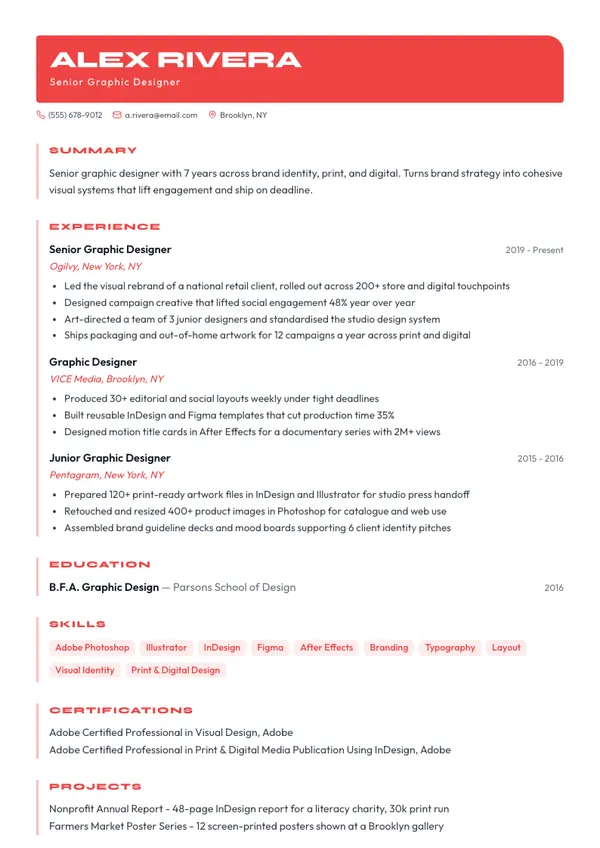
Graphic Designer
Accent Creative template
View example →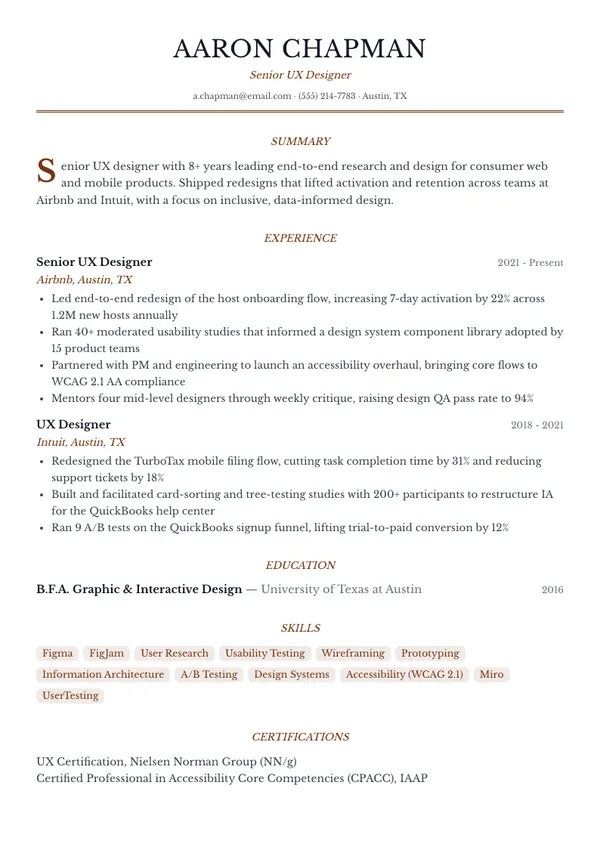
UX Designer
Artisan Serif template
View example →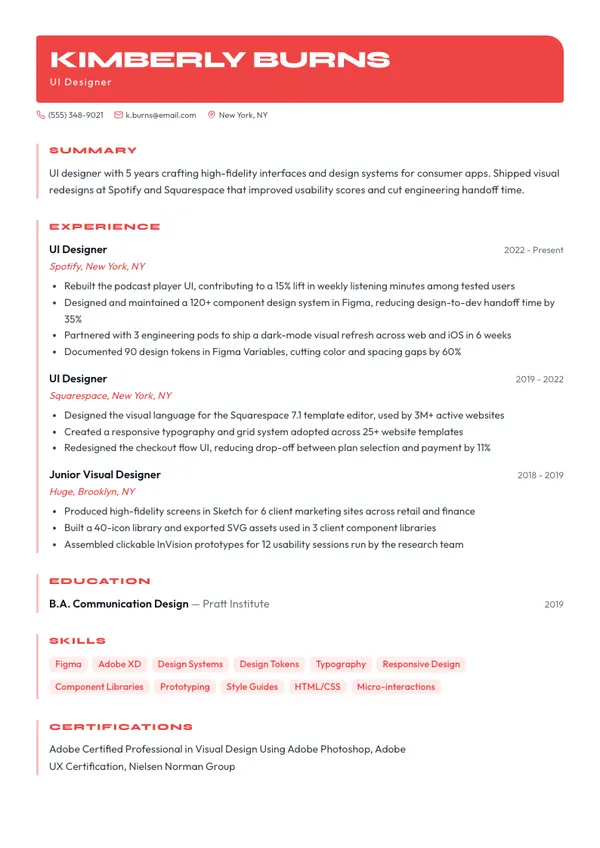
UI Designer
Accent Creative template
View example →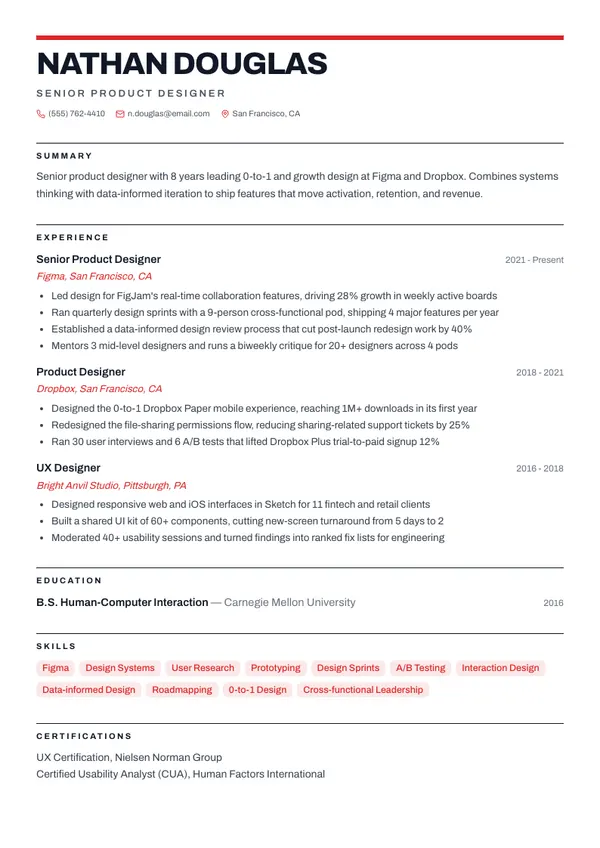
Product Designer
Gridline template
View example →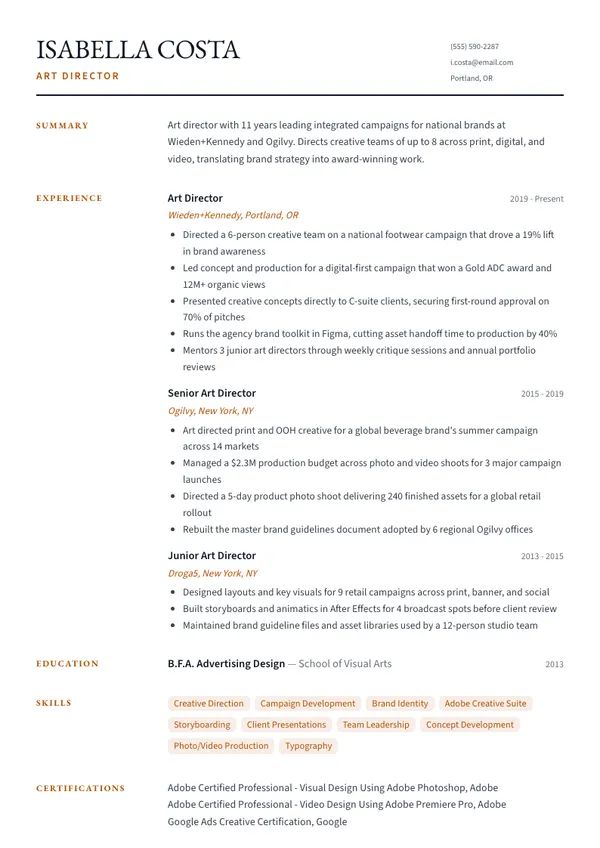
Art Director
Editorial template
View example →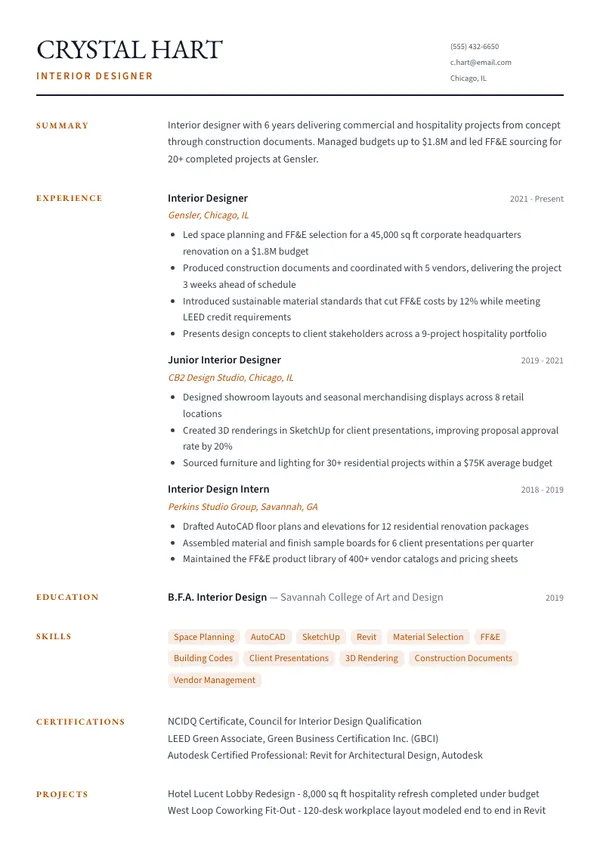
Interior Designer
Editorial template
View example →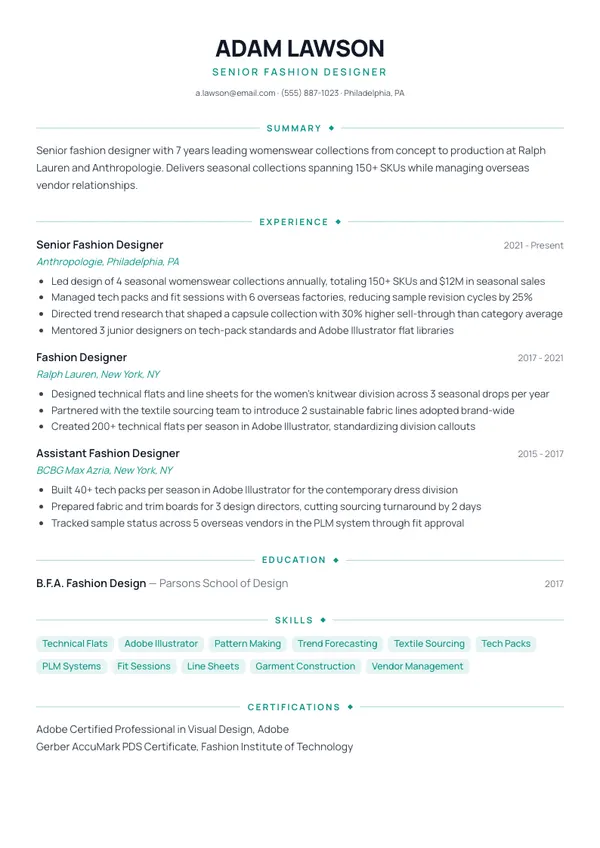
Fashion Designer
Minimalist Teal template
View example →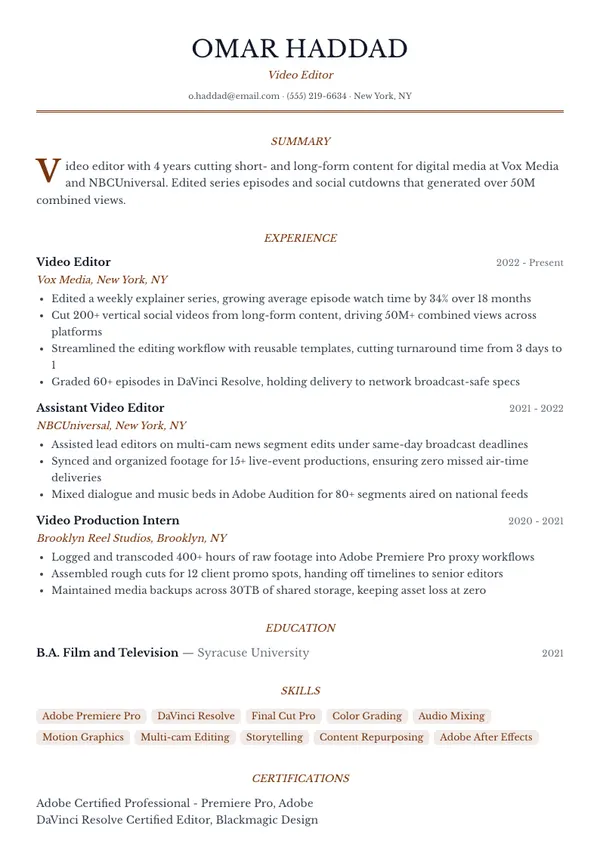
Video Editor
Artisan Serif template
View example →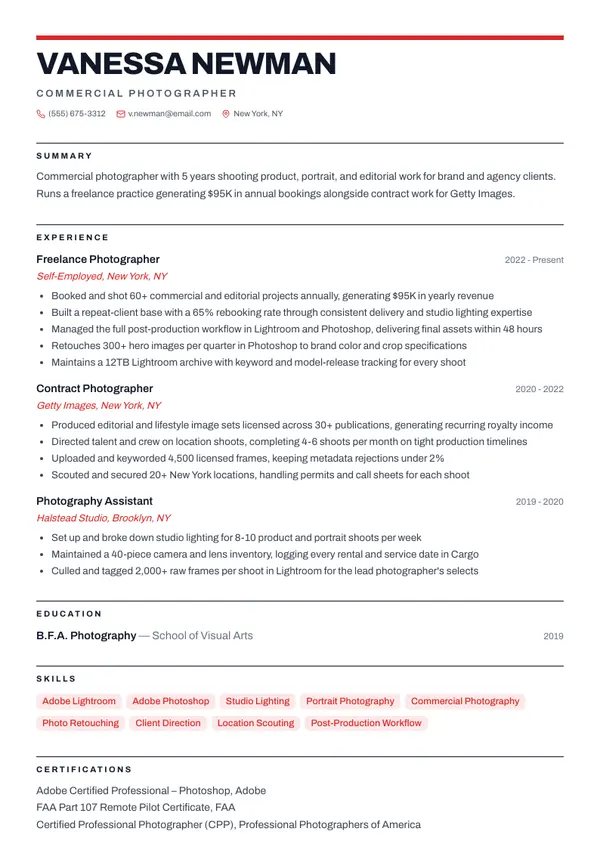
Photographer
Gridline template
View example →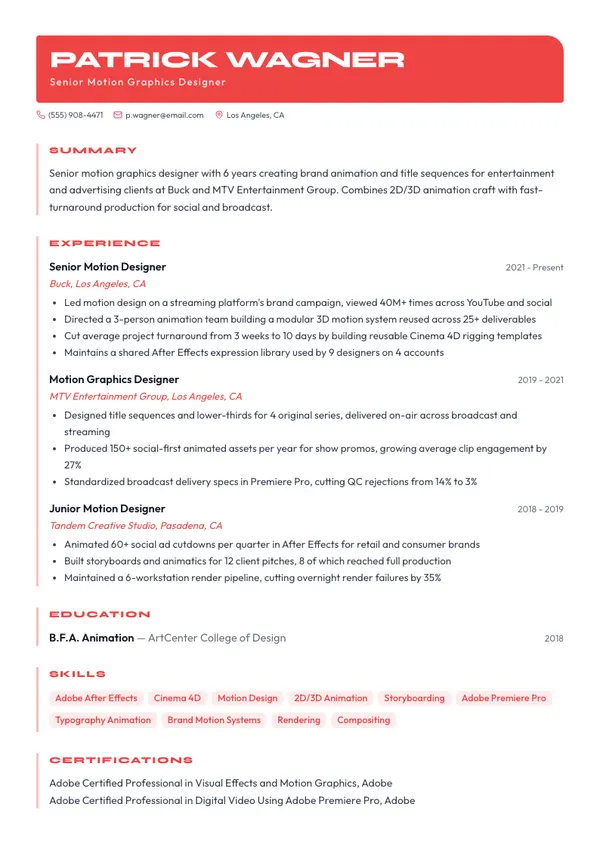
Motion Graphics Designer
Accent Creative template
View example →What hiring managers and ATS look for in a creative and design resume
Design hiring runs two screens at once. The software line is the first: recruiters and parsers match Figma, FigJam, Adobe Photoshop, Illustrator, InDesign, After Effects, and Adobe Creative Suite by exact name, never a catch-all like design software. The second is evidence of outcome, meaning activation lift from an onboarding redesign, a component library adopted across product teams, WCAG 2.1 AA remediation, campaign reach, team size directed, production budget managed.
The portfolio URL belongs in the contact line as plain text, spelled out in full, because parsers often strip the link sitting behind a word like Portfolio. Skip what design resumes reach for most: multi-column layouts, sidebars, text boxes, icon rows, and skill-rating dots that carry no readable text. Keep credentials such as a B.F.A., NN/g UX Certification, or Adobe Certified Professional in a labeled section of their own.
Creative & Design resume questions, answered
Where should the portfolio link go on a designer resume?
Put the full URL in the contact line under your name, written out as text such as yourname.com, not hidden behind a hyperlinked word like Portfolio, since parsers frequently keep only the visible characters. Add a second link for Behance, Dribbble, or a reel if the role covers motion work, and confirm every link resolves without a login.
Does a heavily designed resume hurt me with ATS?
It can. Two-column layouts, sidebars, text boxes, and headers built as image files scramble reading order or drop out entirely, so a strong Photoshop or Figma skill can vanish before a human sees it. Keep the resume single column with real text and standard section headings, and let the portfolio carry the craft. Design leads expect that split.
Should a creative resume include a photo, a personal logo, or skill-rating bars?
Leave all three off for US applications. A photo adds no keyword value, conflicts with bias policies at larger agencies, and sits inside a graphic frame parsers skip. A personal logo does the same. Rating dots are worse: they encode proficiency as shapes, so Illustrator or Cinema 4D reads as a bare word with no context. Use plain lists instead.
Where do awards like Cannes Lions and certifications like NN/g go?
Give them labeled sections near the end: Awards and Recognition for Cannes Lions, D&AD, ADC, or Webby entries, and Certifications for the NN/g UX Certification, Adobe Certified Professional, or an IAAP accessibility credential. Name the show, the category, and the year. When a job ad names a certification, mirror its exact wording rather than an abbreviation a parser may miss.
Browse other industries
Or see all 15 industries and every resume template.