Science & Research Resume Examples
Turn rigour into a resume. These science and research examples showcase methods, publications, and measurable findings.
10 free science & research examples — every one is a complete, ATS-checked resume you can open and edit.
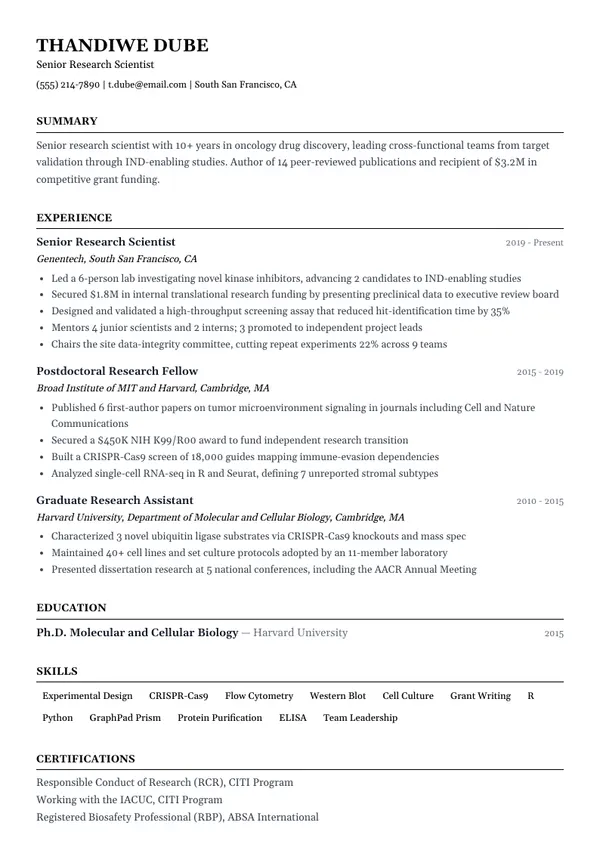
Research Scientist
Pure ATS template
View example →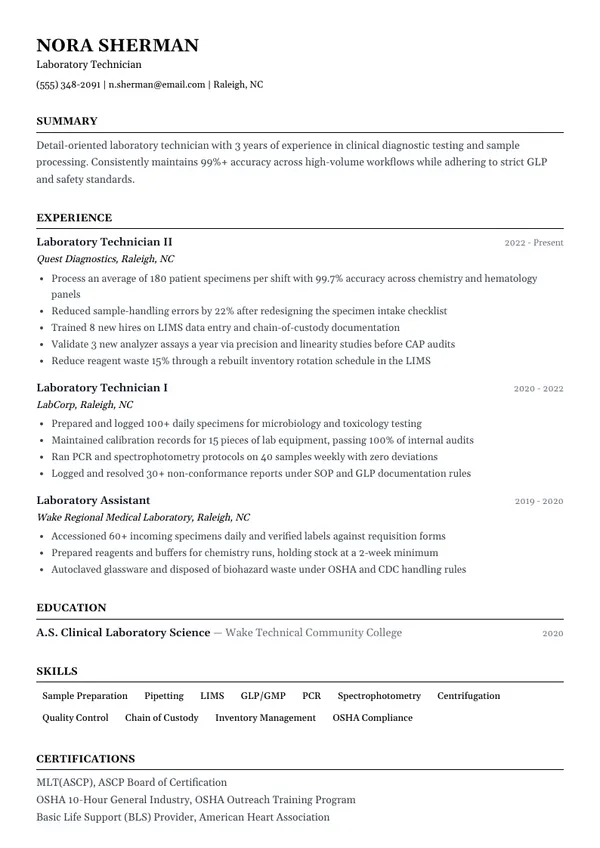
Laboratory Technician
Pure ATS template
View example →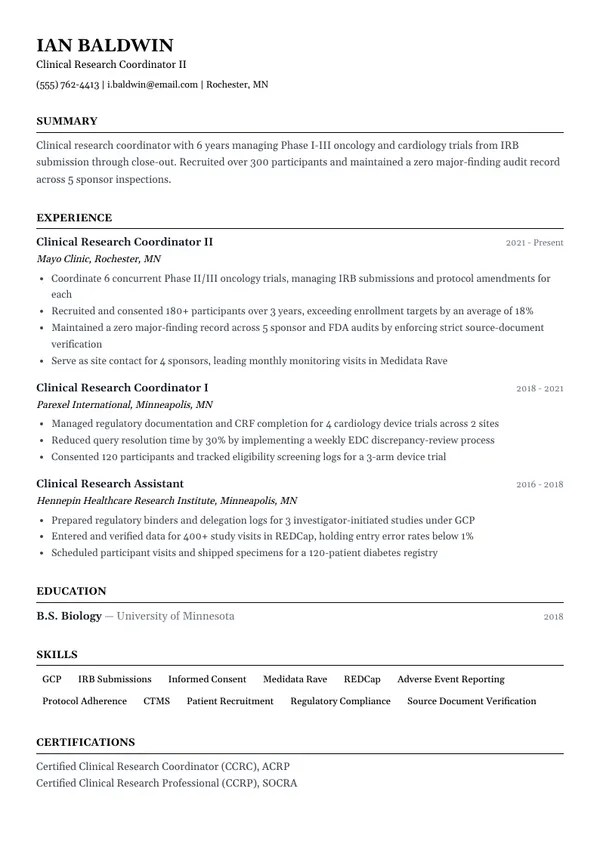
Clinical Research Coordinator
Pure ATS template
View example →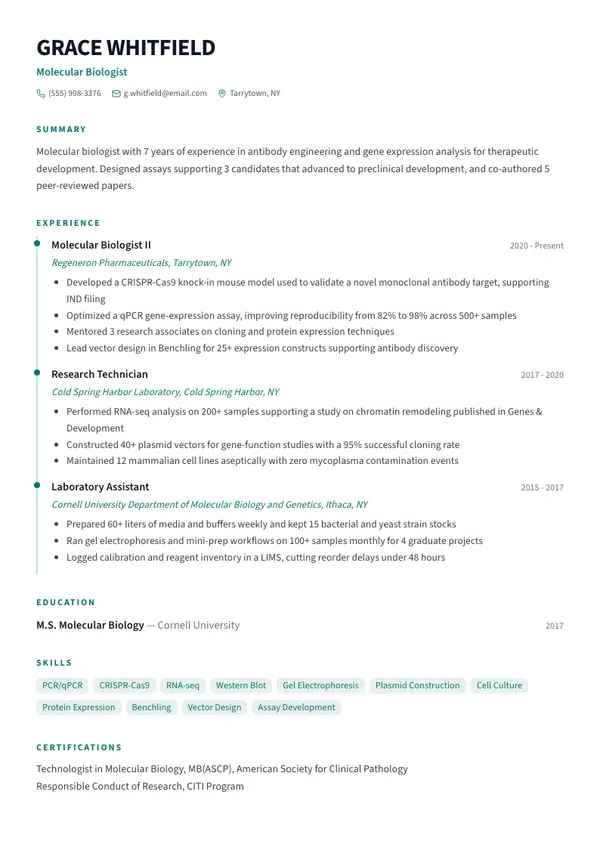
Molecular Biologist
Chronicle template
View example →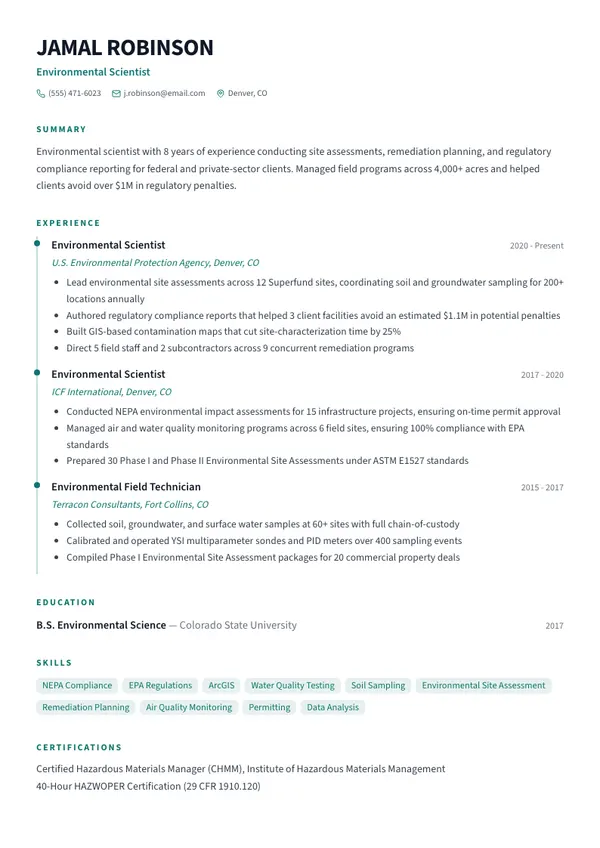
Environmental Scientist
Chronicle template
View example →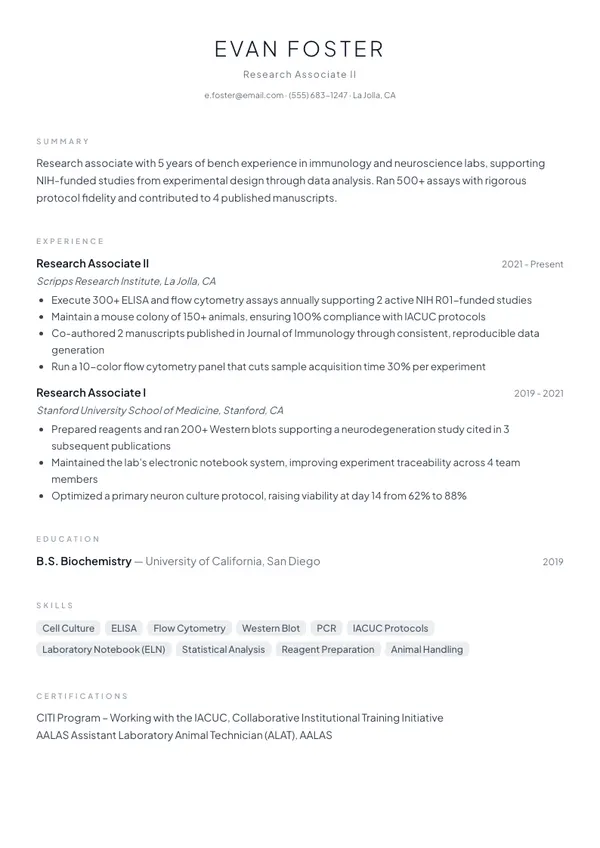
Research Associate
Minimal template
View example →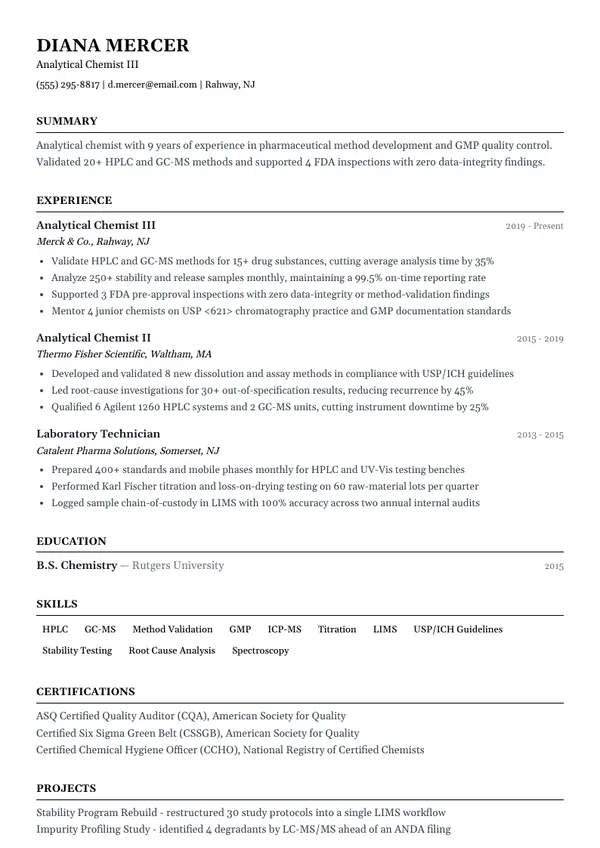
Analytical Chemist
Pure ATS template
View example →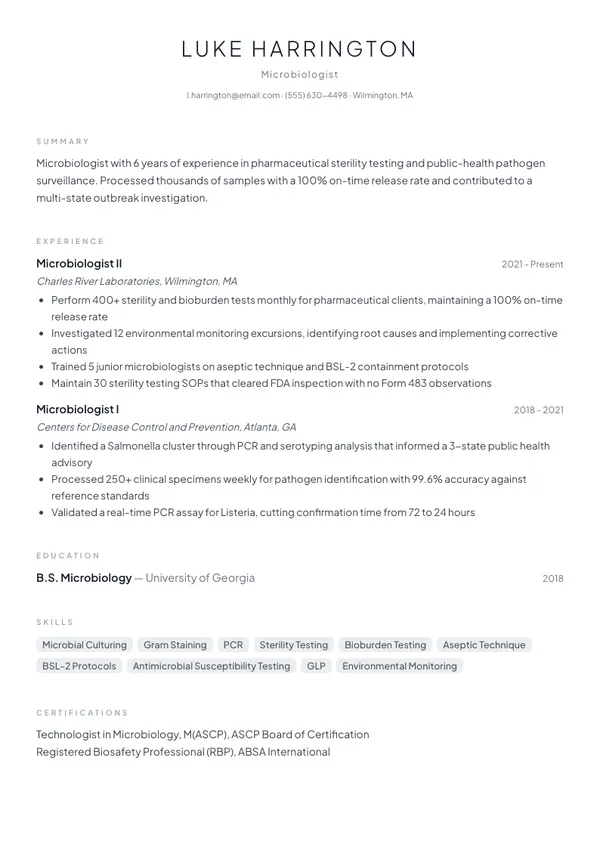
Microbiologist
Minimal template
View example →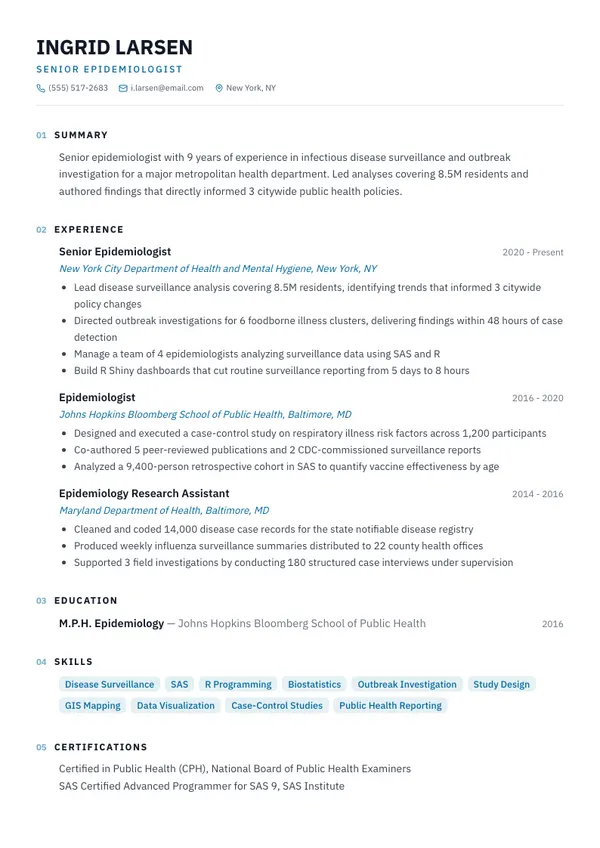
Epidemiologist
Dossier template
View example →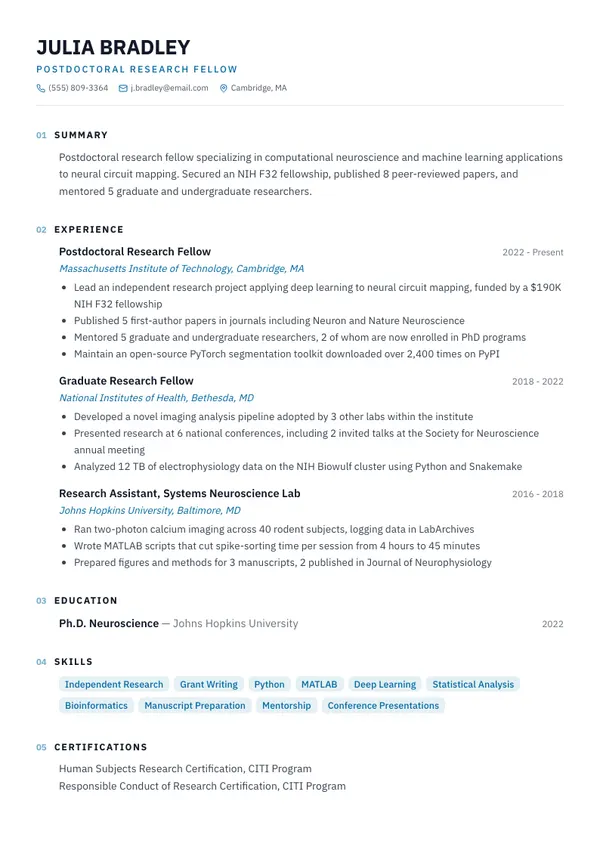
Postdoctoral Research Fellow
Dossier template
View example →What lab hiring managers and ATS filters look for in a science and research resume
Technique names are the filter. Research ATS screens match exact strings — CRISPR-Cas9, qPCR, flow cytometry, ELISA, Gram staining, sterility and bioburden testing — so a line reading lab skills scores nothing. The same goes for standards and systems: GLP, GMP, ICH-GCP, CLIA, CAP, ISO 17025, BSL-2 and BSL-3, LIMS, REDCap, Medidata Rave, Benchling, GraphPad Prism, R and SAS. Write in vivo when the posting says in vivo.
Rigor has to be countable. Hiring committees and trial sponsors read throughput, turnaround, reproducibility, enrollment and consent totals, trial phase, audit findings, grant dollars and IND milestones — 400 sterility tests monthly at 100 percent on-time release, 180 participants consented, zero major findings across five FDA audits, $3.2M secured. Give publications a Selected Publications heading with three to five citations, not a CV dump, and keep certifications and grants in their own single-column section.
Science & Research resume questions, answered
Should I send a resume or an academic CV for an industry research job?
Send a two-page resume. Industry postings run ATS parsing, and a twelve-page CV listing every poster, teaching assignment and conference abstract dilutes keyword density. Keep the CV for faculty, fellowship and grant applications. Convert it by cutting to three to five Selected Publications, folding coursework into Education, and rewriting method descriptions as quantified outcomes.
How many publications should go on a research scientist resume, and where?
Three to five, under a Selected Publications heading placed after experience, in plain journal-citation format with your name in the author list. Add a summary line stating the totals — 14 peer-reviewed papers, $3.2M in grant funding — so the count registers without the full list. Include h-index or citation counts only when the posting rewards it. Skip two-column bibliographies; parsers read them across.
Where do GCP, CCRC, ASCP or biosafety credentials belong on a science resume?
In a dedicated Certifications section, spelled out and abbreviated both ways — Good Clinical Practice (GCP), ACRP Certified Clinical Research Coordinator (CCRC), ASCP Medical Laboratory Scientist — with issuing body and date. Repeat hard-filter terms like BSL-2, BSL-3, CLIA and CAP in Technical Skills. Certifications set in a sidebar, table or graphic badge are the ones that disappear during parsing.
How should a clinical research coordinator list trials and study systems?
Name the phases (Phase I to IV), therapeutic areas and concurrent study counts in the experience bullets, then quantify enrollment, consent totals and audit outcomes. List EDC and CTMS platforms by name in skills — Medidata Rave, Veeva, REDCap, Oracle Clinical — because sponsors search those exact strings. Keep protocol tables out; write each study as a plain-text bullet under the site or sponsor.
Browse other industries
Or see all 15 industries and every resume template.